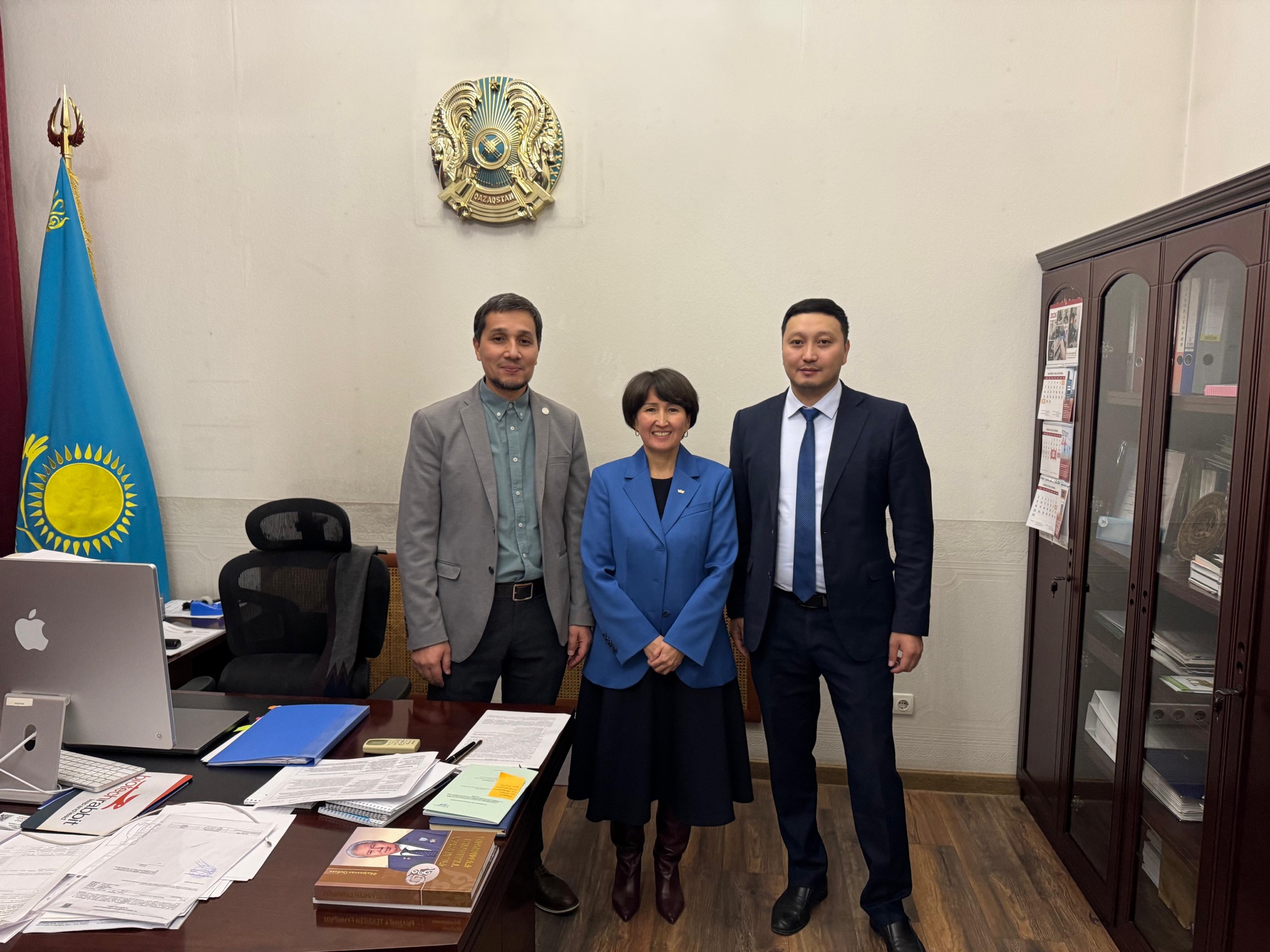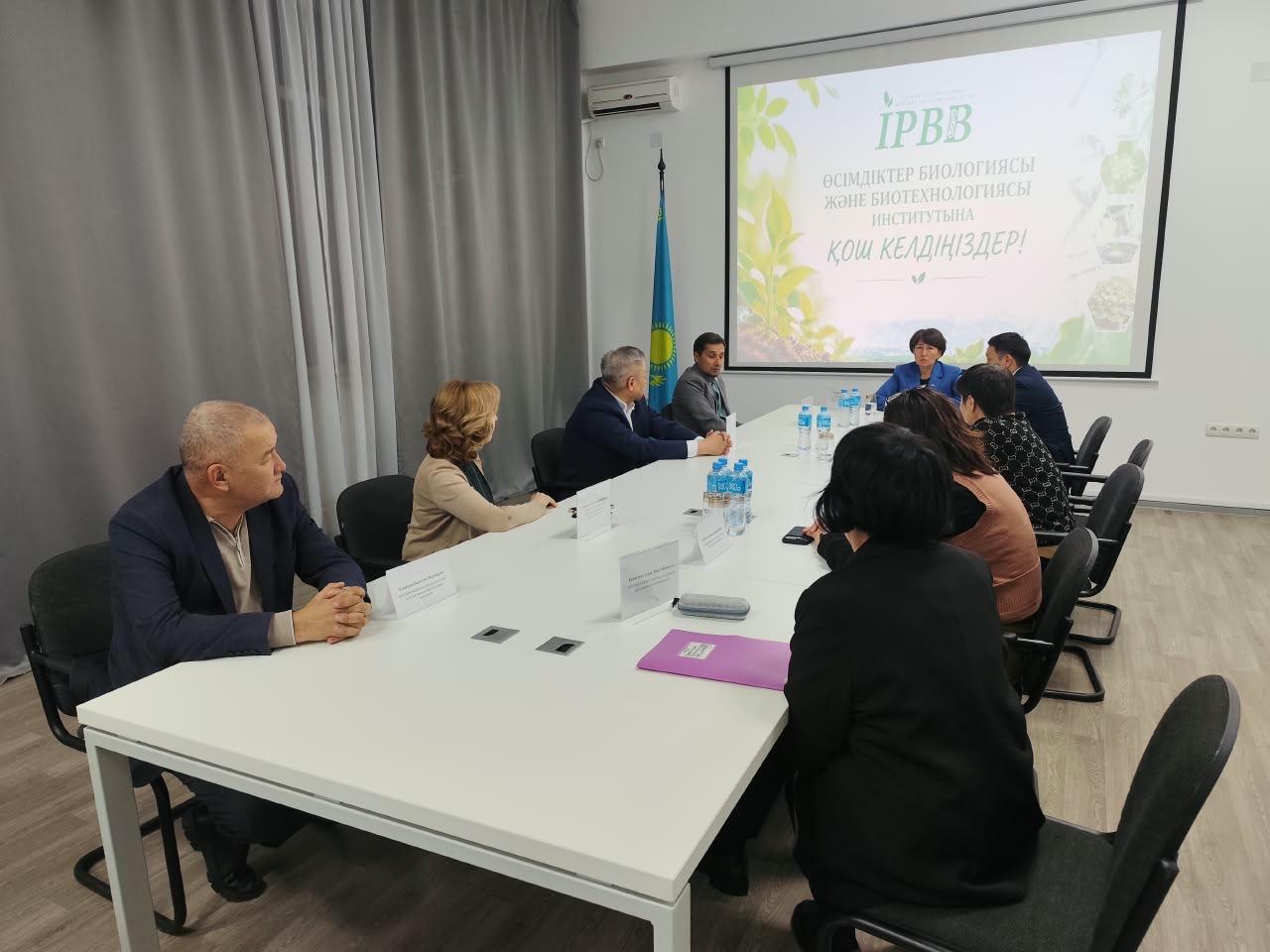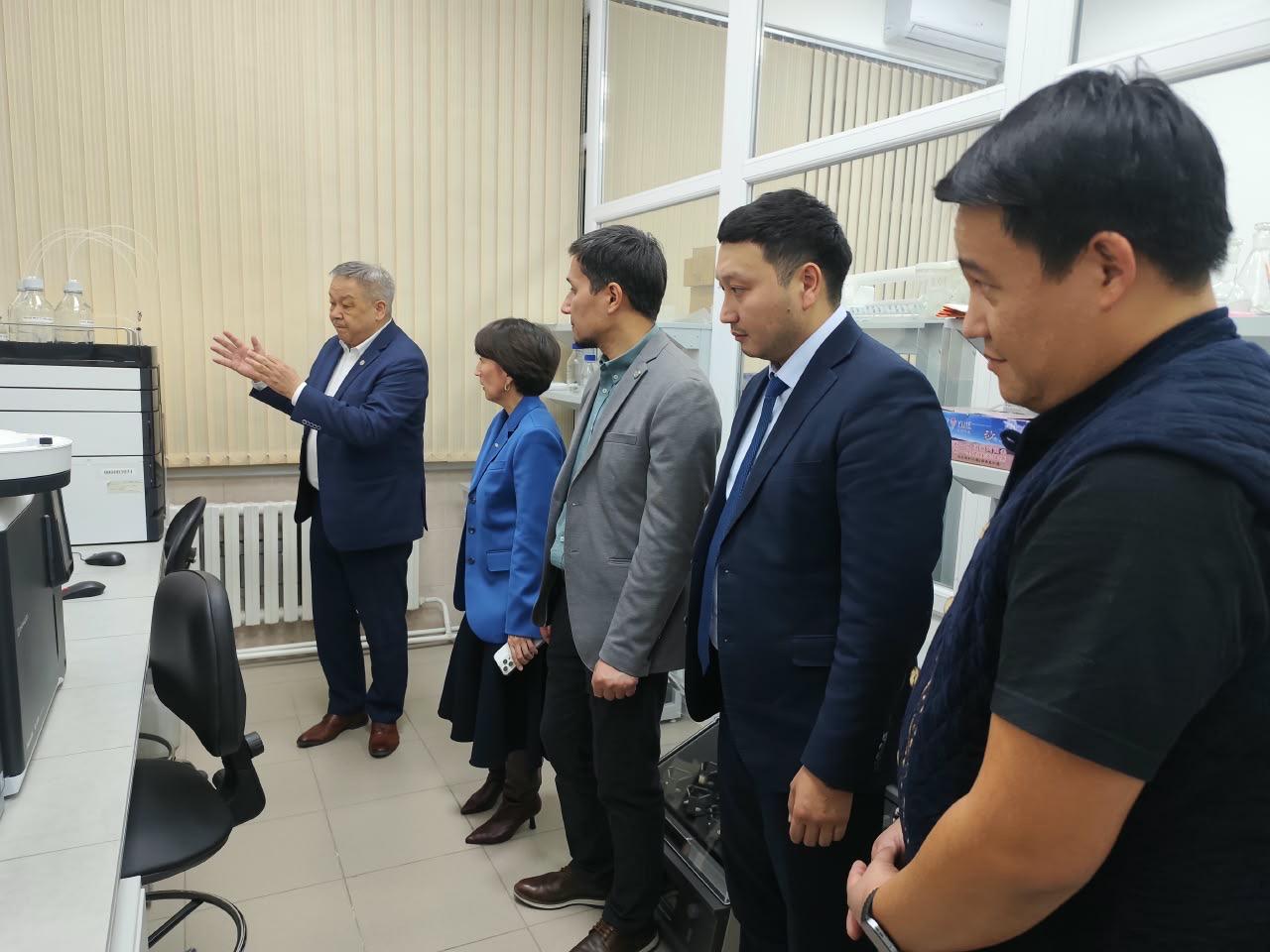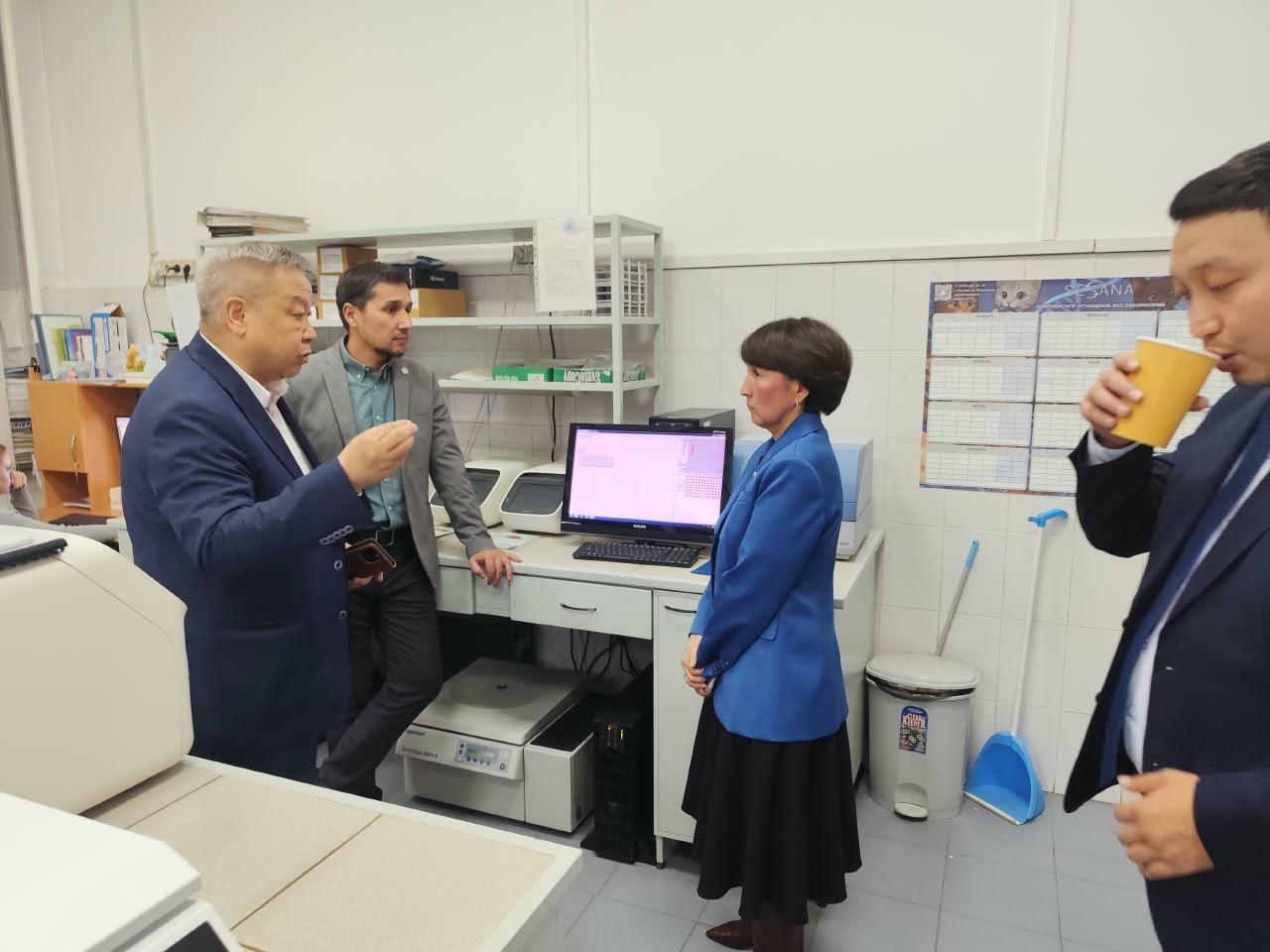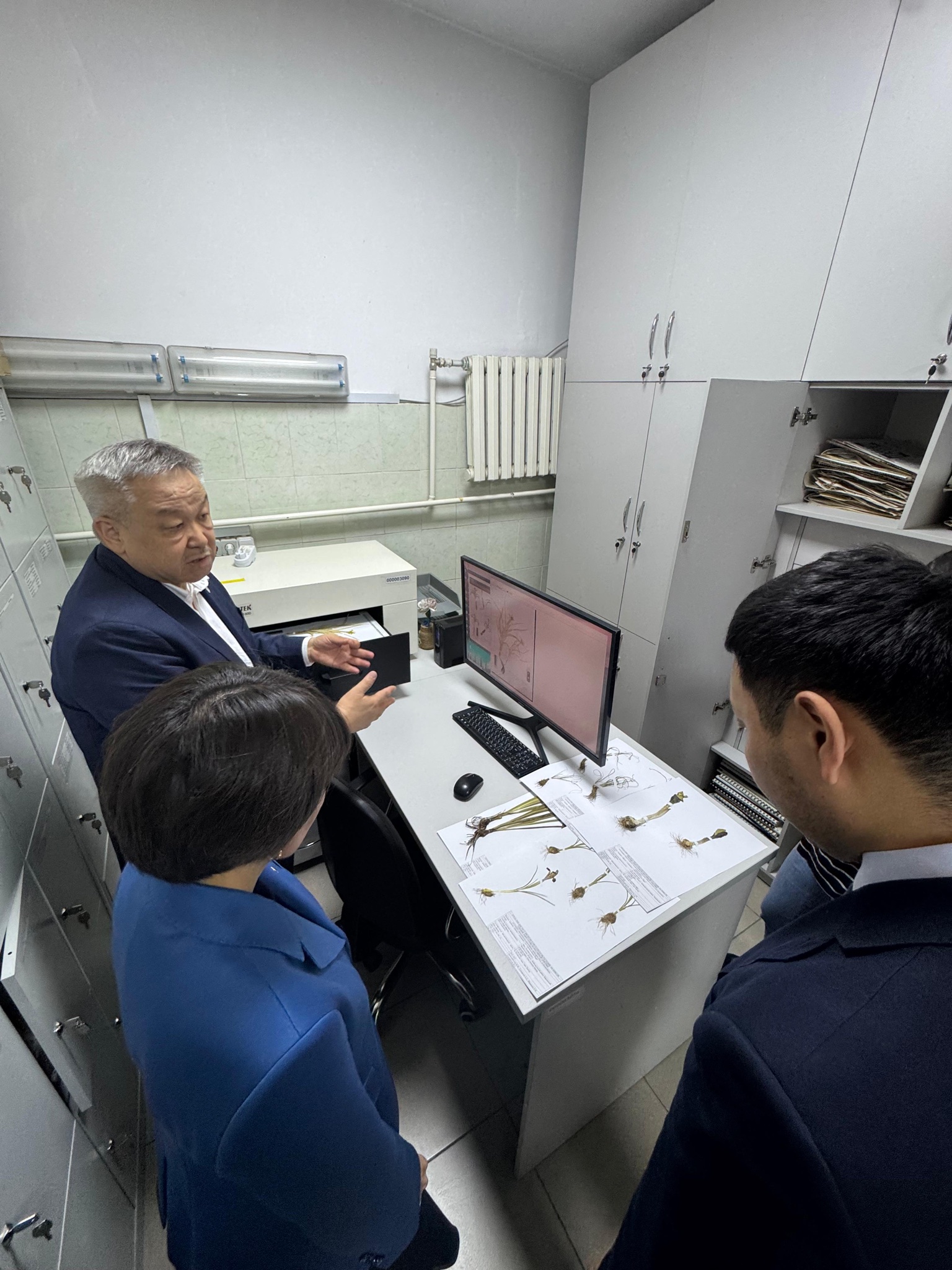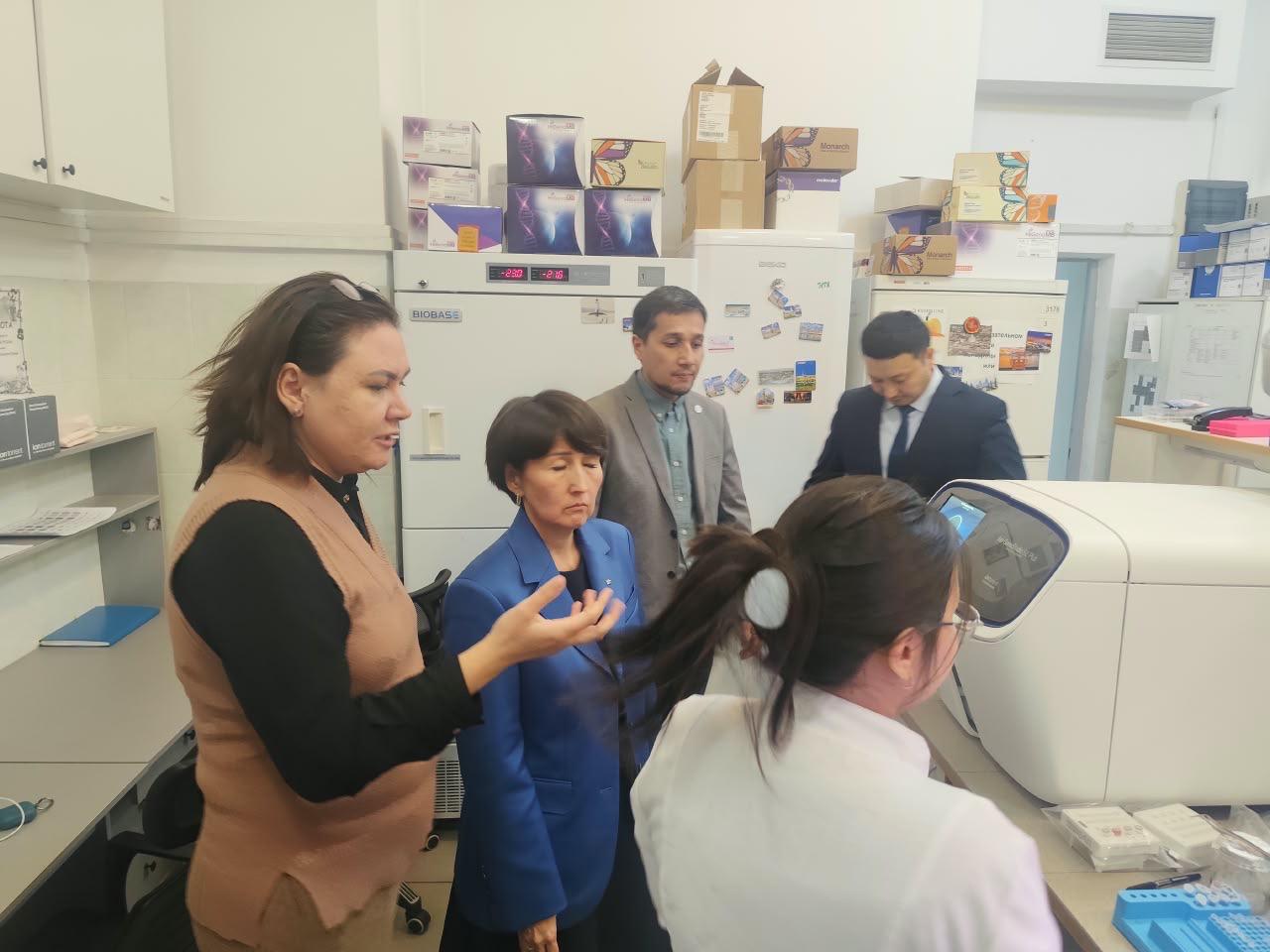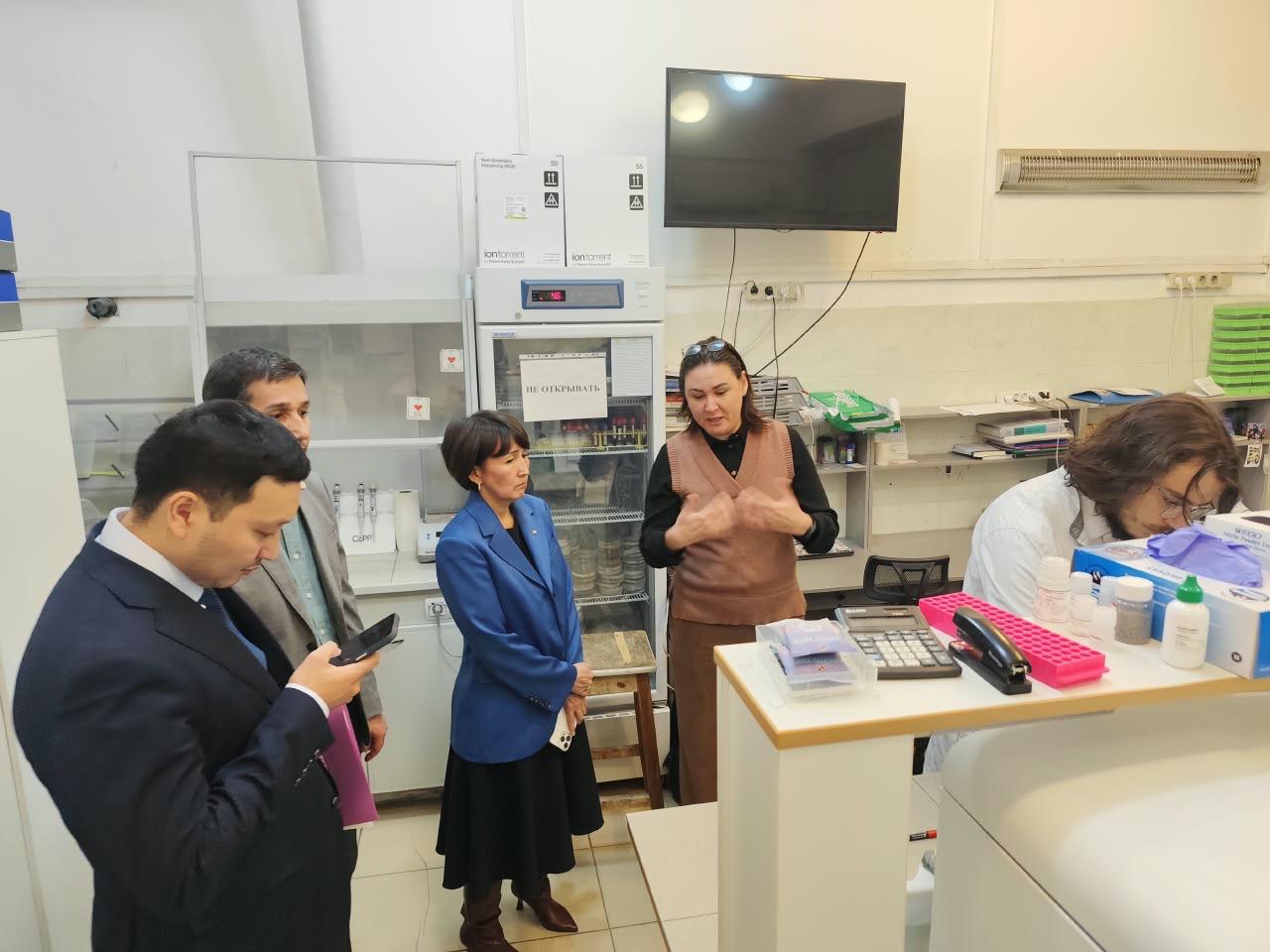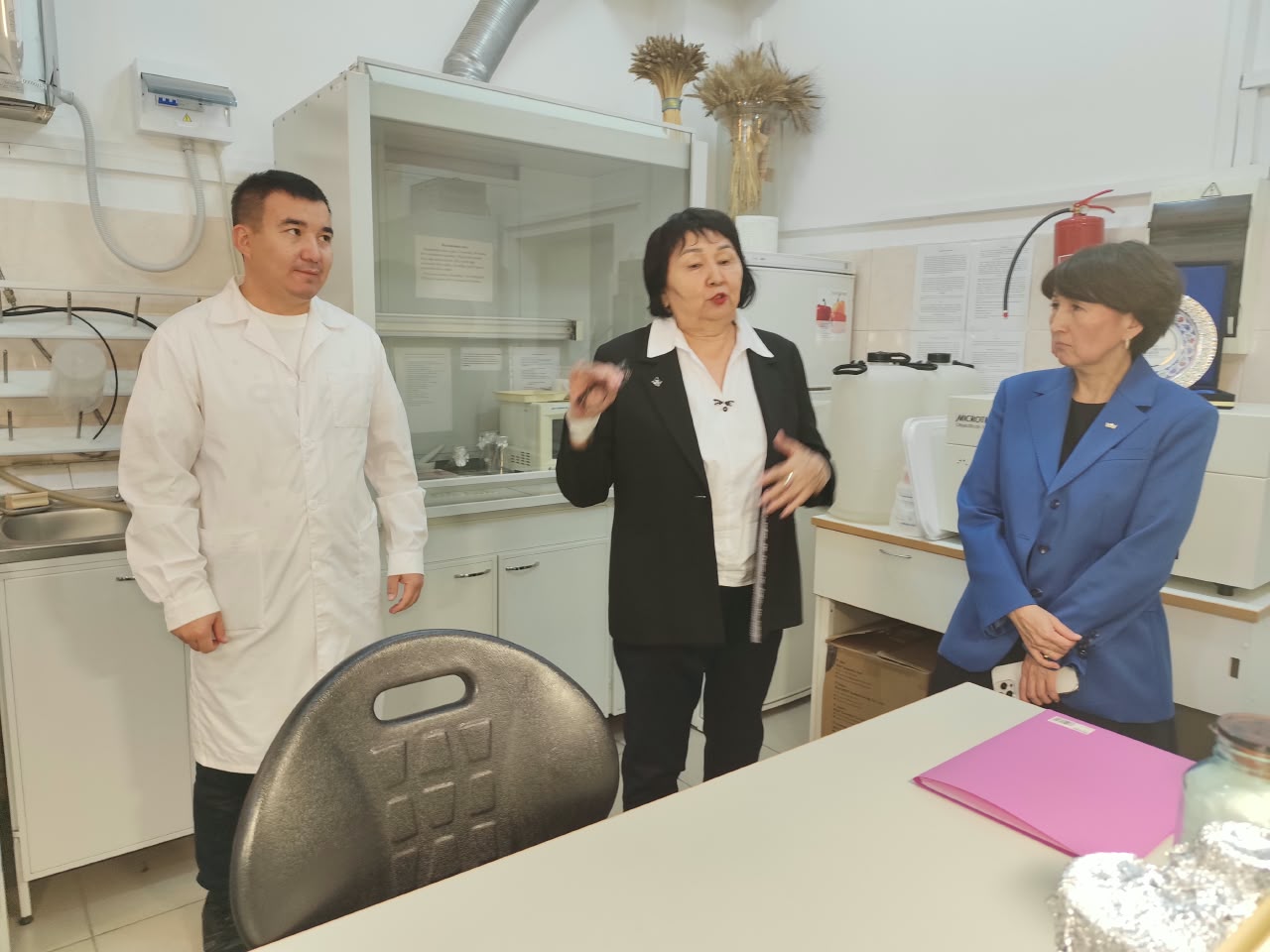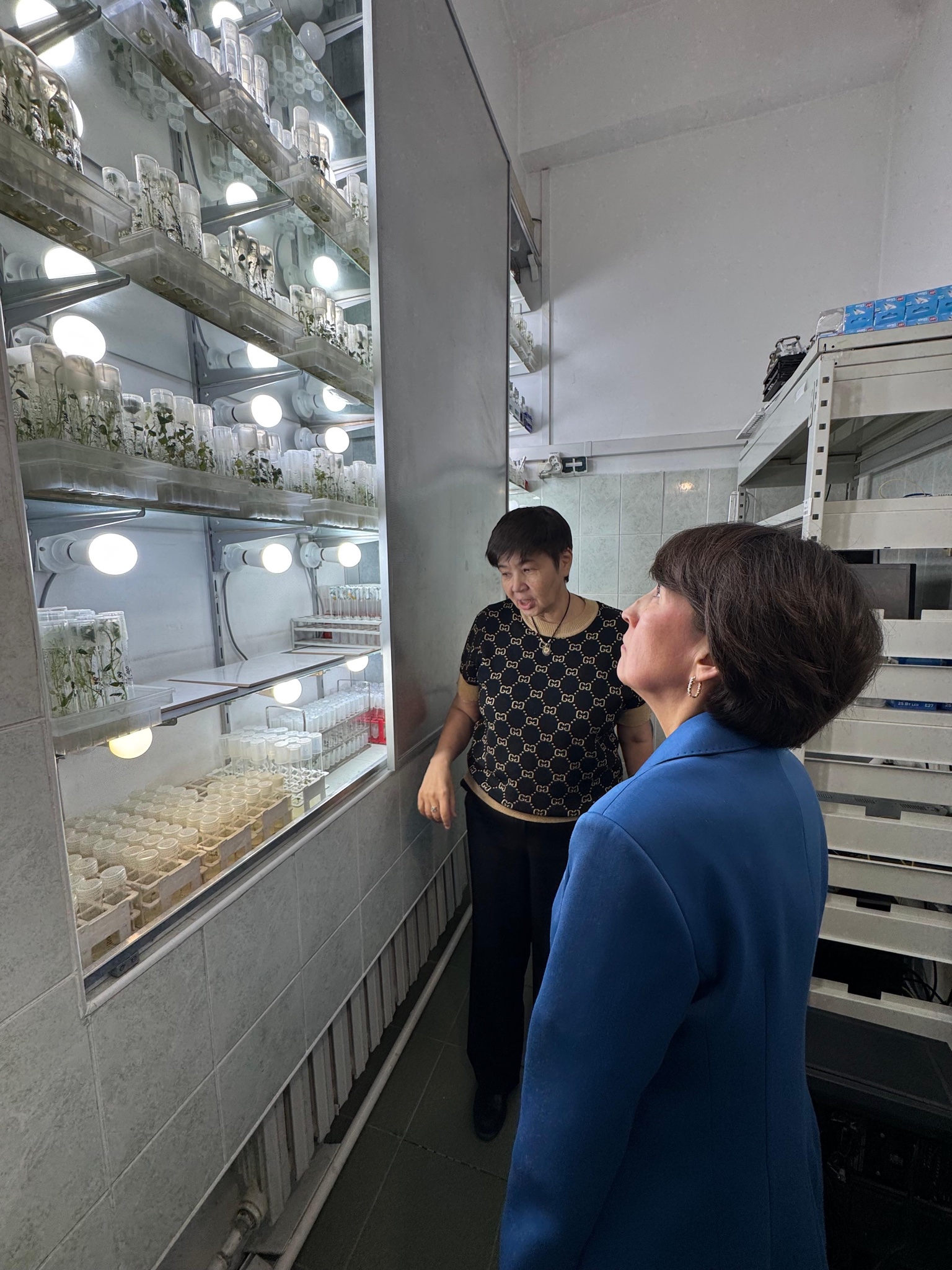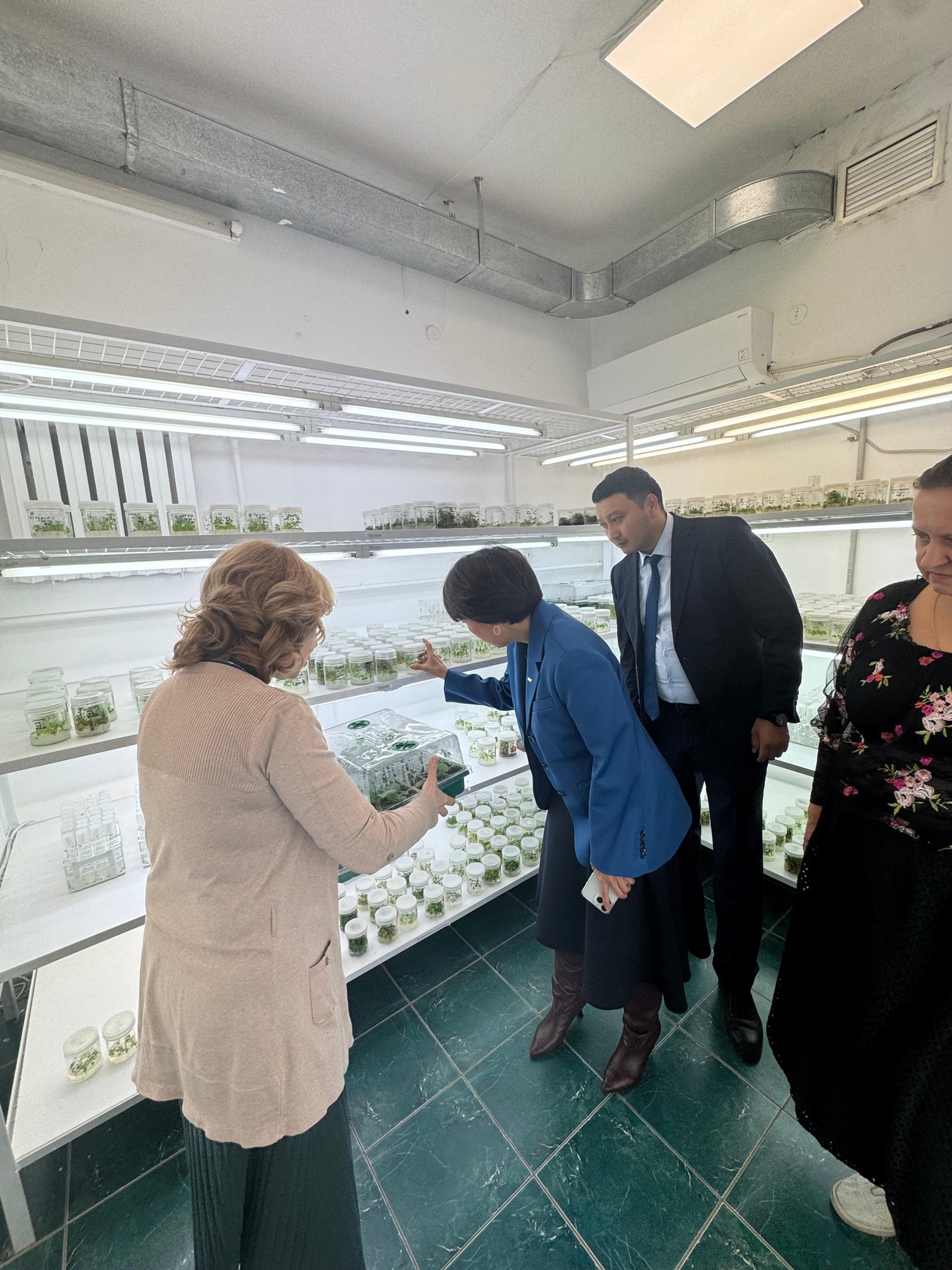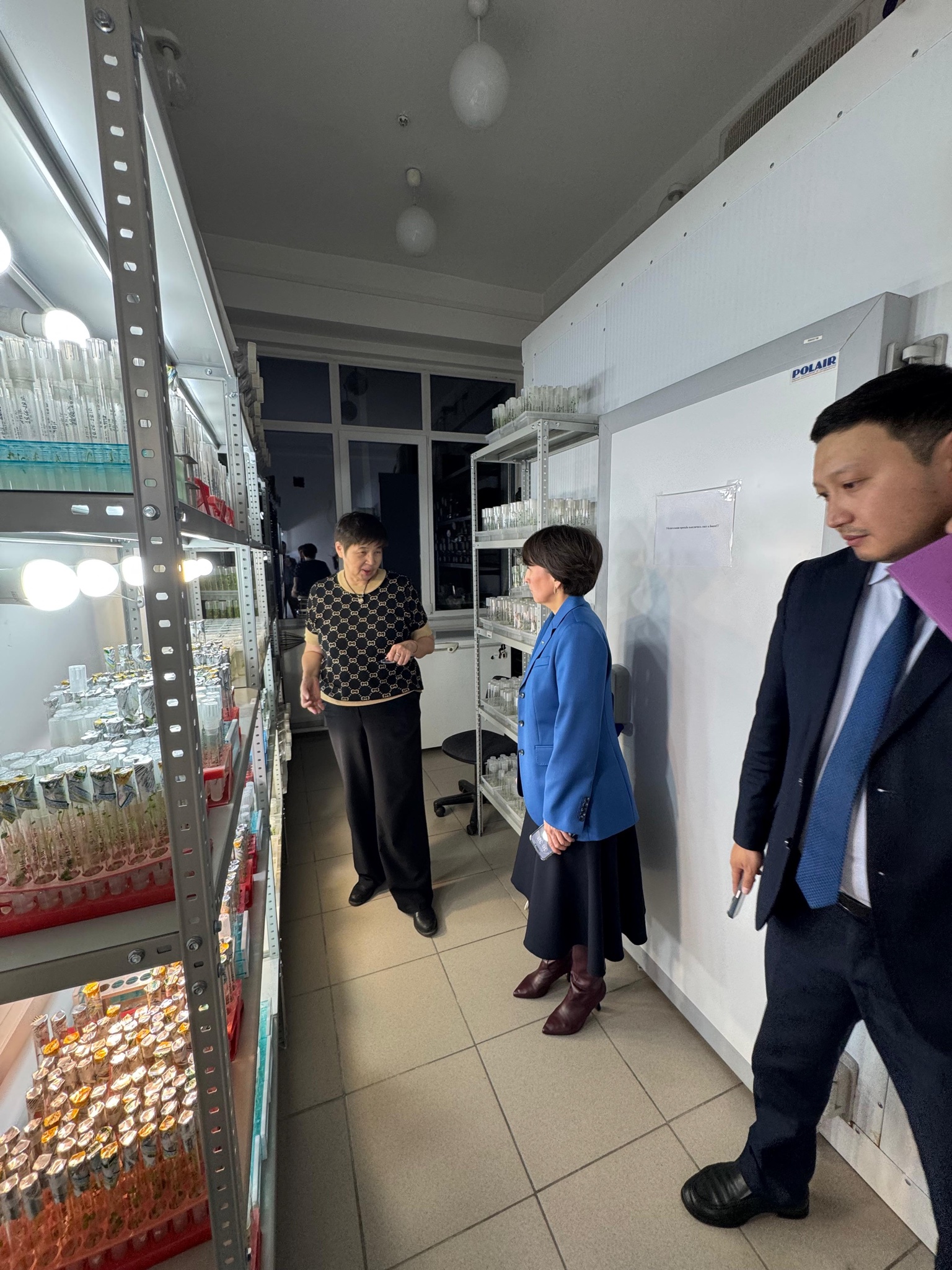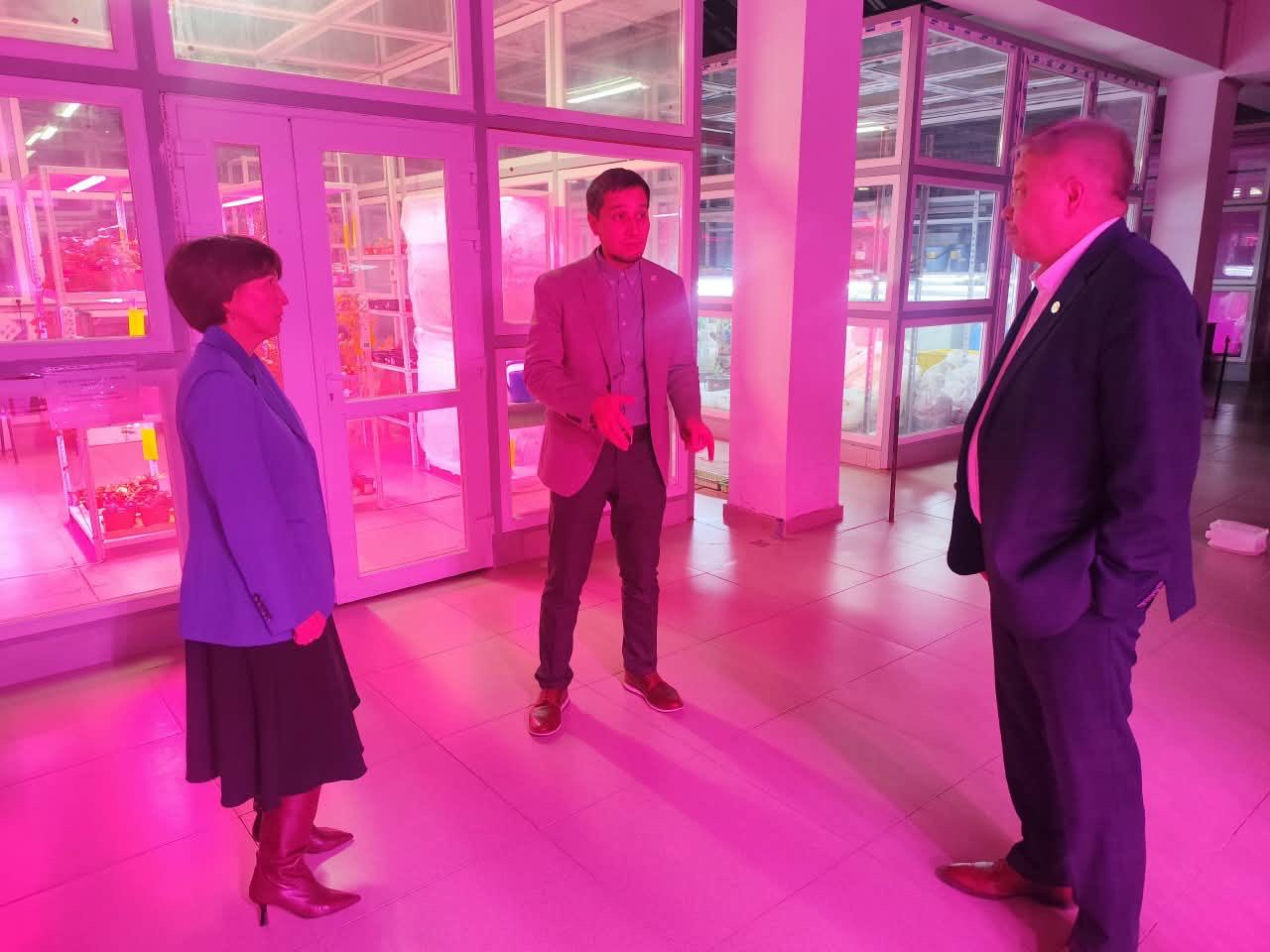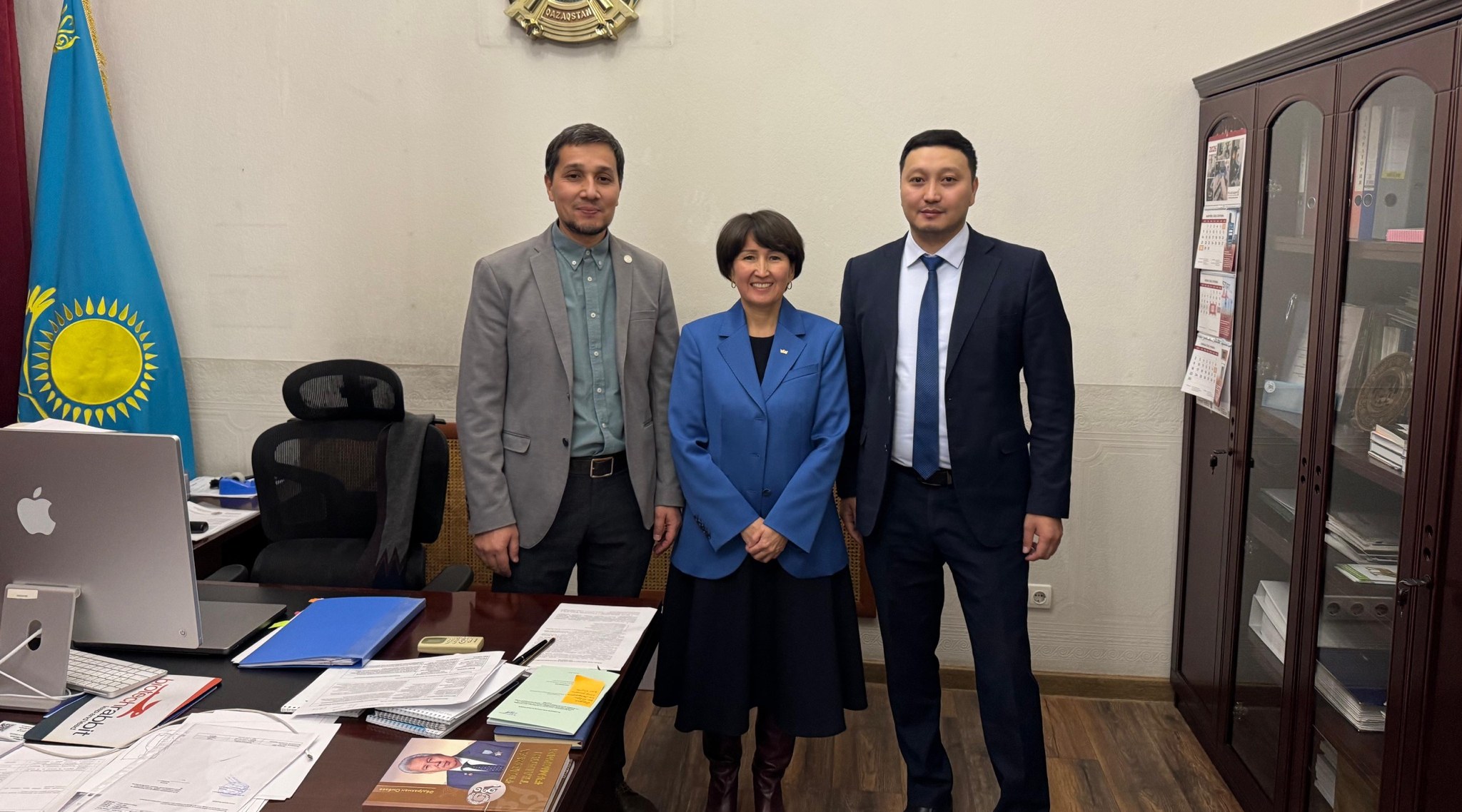
On 30 October 2026, the Institute of Plant Biology and Biotechnology was visited by Gulzat Kobenova, Vice Minister of Science and Higher Education of the Republic of Kazakhstan, and Renat Yelishibekov, Deputy Chairman of the Science Committee of the Ministry of Science and Higher Education of the Republic of Kazakhstan.
During the visit, Kanat Yermekbayev, Director General of the Institute, presented its main areas of scientific activity, ongoing projects and the results achieved through the implementation of scientific developments. The guests were introduced to the Institute’s research infrastructure and its practical achievements in crop breeding, plant biotechnology and biodiversity conservation.
In the field of molecular diagnostics, PCR-based test systems for detecting pathogens affecting agricultural crops have been developed and patented. One of these developments - a test system for identifying the Asian subspecies of the spongy moth - has been introduced at the Republican Plant Quarantine Centre of the Ministry of Agriculture of the Republic of Kazakhstan and is used for phytosanitary monitoring.
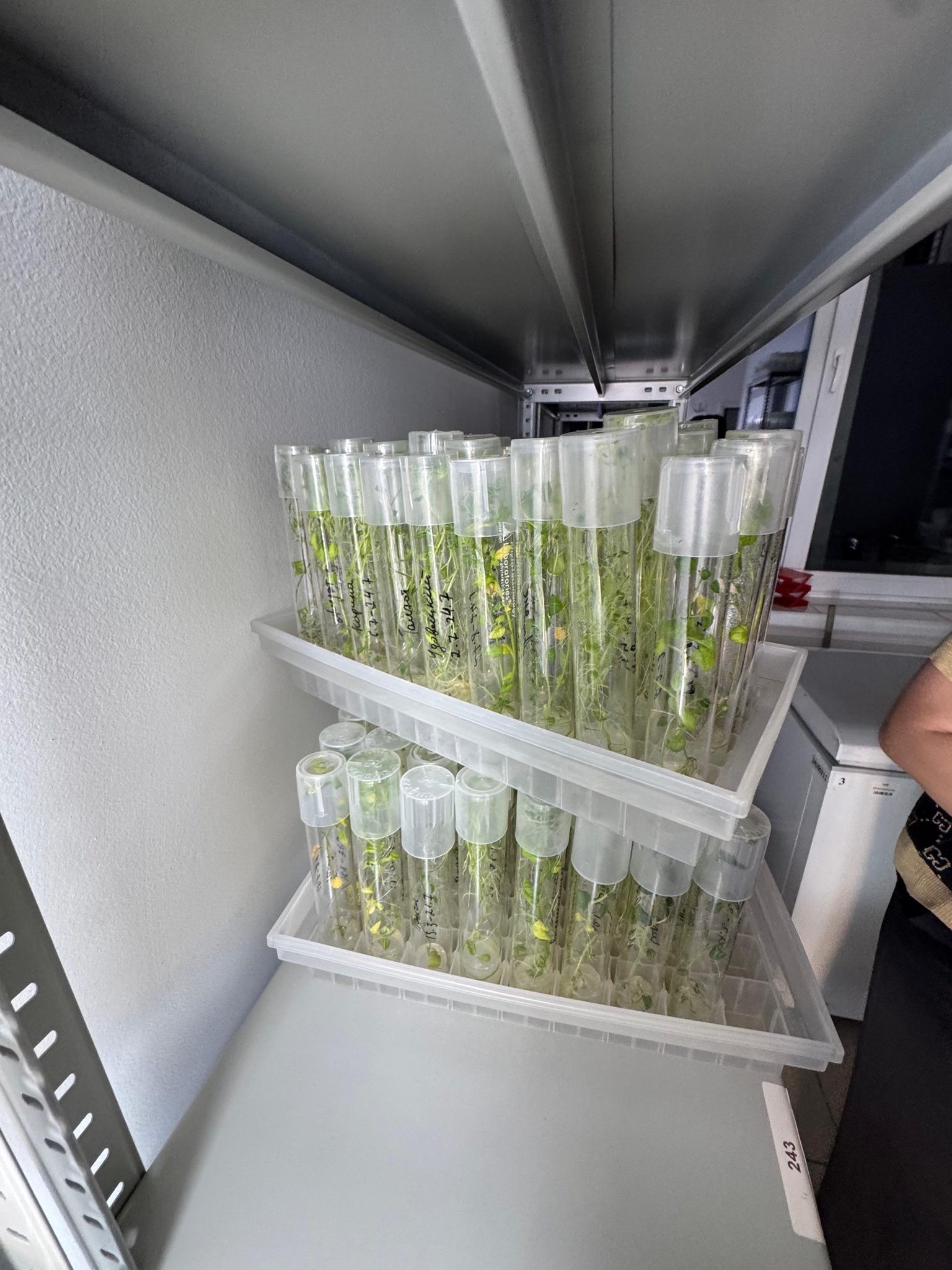
In the field of biotechnology, a technology for producing disease-free seed potatoes using a bioreactor has been introduced, increasing the plant propagation rate by 6–10 times. A commercialisation project is also being implemented to produce elite raspberry planting material through in vitro micropropagation.
Technologies for the propagation and cultivation of turanga poplar have been developed to restore riparian forests and landscape arid areas. Planting has been carried out in several regions of Kazakhstan, including as part of the Taza Qazaqstan environmental initiative. In cooperation with the FAO, research is under way to provide a scientific basis for the use of turanga poplar in forest restoration (https://www.inform.kz/ru/kazahstanskiy-proekt-povosstanovleniyu-lesov-voshel-vchislo-luchshih-vmire-6e8ba3e5).
Significant results have been achieved in crop breeding. Using molecular genetic methods, new varieties of wheat, barley, soybean and rice have been developed both independently and in cooperation with institutions under the Ministry of Agriculture of the Republic of Kazakhstan. DNA marker-assisted and genomic selection technologies have been introduced into the work of Kazakhstan’s breeding centres, helping to accelerate the development of high-yielding and resilient varieties. The Institute’s developments include the wheat varieties Alikhan, Raminal, Talimi, Shol, Zarina, Tucha and Alika, as well as the barley varieties Tlek, Kazygurt and Shakhristan, among others.
Three rice varieties - Kazvetta, Fatima and Almavita - have been developed and officially released for cultivation. They are distinguished by valuable grain quality characteristics.
In addition, DNA barcoding and molecular taxonomy methods have been introduced, and their results are being used to study and conserve the genetic resources of Kazakhstan’s flora (https://kazflora.kz/).
The visit demonstrated the Institute’s scientific potential and the practical importance of its developments aimed at advancing domestic crop breeding, introducing modern biotechnologies, conserving biodiversity and strengthening the country’s food security.
Photos