
Brief description of the project
(2023-2025)
Project title: IRN АР 19679273 «Developing a technology for phytostabilisation of soils complexly contaminated with toxic substances within an energy “zero-waste” approach».
Relevance.
The rapid industrial and agricultural expansion of the oil and gas sectors in Kazakhstan, like in many other countries, has resulted in soil contamination with trace elements (TEs), pesticides, and oil products, being a severe environmental hazard. Under natural conditions, the soil surrounding these enterprises is contaminated with numerous TEs. The accumulation of xenobiotics in agricultural soils, as well as their penetration into the food chain, is posing a grave danger to food security. The problem of an excess of two or more contaminants in the environment serves as the foundation for the development of innovative solutions.
The most important task in the development of phytotechnology is research into the basic principles of plant adaptation to the toxicity of xenobiotics, as well as the mechanisms for maintaining soil stability and methods for its remediation. In recent years, researchers have focused on understanding the relationship between the activity of antioxidant defence components and plant tolerance to TEs, which is crucial for selecting resistant plant species for the phytoremediation of contaminated soils. Due to the long remediation time and the need to dispose of contaminated biomass, many scientists are researching the elimination of wastes by converting them into bioproducts. Such studies are still in the early stages, and the production of bioproducts from animal and plant raw materials is being actively researched in many countries around the world.
Since the shift in research emphasis toward bioenergy, one of the primary criteria for producing enhanced bioproducts is the utilisation of non-food lignocellulosic biomass to minimise competition with food crops. Due to a lack of international and national standards and regulations, assessing the potential and quality of energy crops biomass for use as feedstock in the energy sector is an urgent necessity. However, zero-waste technology has been presented in phytotechnology using lignin, cellulose, and lignocellulose-rich bioenergy crops. The content of these fibres is crucial in the manufacturing of biochar and pulp (fibres) from contaminated biomass, ensuring the rational use of raw materials and reducing costs. This method efficiently addresses the problem of soil remediation while searching for alternate feedstock for bioenergy production.
The goal of the project: To evaluate the mechanisms of physiological and biochemical tolerance of Miscanthus × giganteus and Miscanthus sinensis concerning the activity of plant and rhizosphere oxidative and antioxidant enzymes under complex soil contamination (pesticides/TEs; petroleum hydrocarbons/TEs), taking into account the qualitative assessment of the contaminated biomass in the context of «zero-waste» technology.
Expected results: Technology of phytostabilisation of soils complexly contaminated with xenobiotics considering Miscanthus spp. physiological and biochemical properties of resistance and contaminated biomass energy potential for the bioenergy industry.
Scientific Supervisor of the project: Nurzhanova A.A., Dr.Sc. in Biology, Professor
Research group: Berzhanova R.Zh., PhD, associate professor; Mamirova A.A., PhD; Nurmagambetova A.S., Master; Zhumasheva J., Master; Boranbay M. Laboratory Assistant/
List of publications of the project’s participants (2018-2022)
Nurzhanova A., Pidlisnyuk V., Abit K., Nurzhanov C., Kenessov, B., Stefanovska T., Erickson L., 2019. Comparative assessment of using Miscanthus x giganteus for remediation of soils contaminated by heavy metals: a case of military and mining sites. Environmental Science and Pollution Research, 2019. Vol.26, pp.13320-13333, https://doi.org/10.1007/s11356-019-04707-z
WoS:Q2, IF 5.053, percentile 80%, FWCI 1.45
- Pidlisnyuk, V., Mamirova, A., Pranaw, K., Shapoval, P. Y., Trögl, J., Nurzhanova, A. Potential role of plant growth-promoting bacteria in Miscanthus × giganteus phytotechnology applied to the trace elements contaminated soils. // International Biodeterioration & Biodegradation. — 2020. – Vol. 155. — P. 105103. https://doi.org/10.1016/j.ibiod.2020.105103
WoS: Q1, IF 4.32, percentile 87%, FWCI 0.61
- Nurzhanova A., Mukasheva T., Berzhanova R., Kalugin S., Omirbekova A., Mikolasch A. Optimization of microbial assisted phytoremediation of soils contaminated with pesticides // Int. J. Phytoremediation. Taylor & Francis, 2021.Vol. 23 (5): 482–491. https://doi.org/10.1080/15226514.2020.1825330
WoS:Q2, IF 4.003. percentile 84%, FWCI 0.39
- Nurzhanova A., Mamirova A., Trögl J., Nebeská D., Pidlisnyuk V.V. Plant–Microbe Associations in Phytoremediation // Phytotechnology with Biomass Production: Sustainable Management of Contaminated Sites / ed. Erickson L.E., Pidlisnyuk V.V. CRC press Taylor & Francis Group, — 2021. — P. 123–140. Web of Science database
- Mamirova, A., Pidlisnyuk, V., Amirbekov, A., Ševců, A., & Nurzhanova, A. (2021). Phytoremediation potential of Miscanthus sinensis And. in organochlorine pesticides contaminated soil amended by Tween 20 and Activated carbon. // Environmental Science and Pollution Research. — 2021. – Vol. 28, Is. 13. – P. 16092–16106. https://doi.org/10.1007/s11356-020-11609-y
WoS:Q2, IF 5.053, percentile 80%, FWCI 1.67
- Tarla D.N., Erickson L.E., Hettiarachchi G.M., Amadi S.I., Galkaduwa M., Davis L.C., Nurzhanova A., Pidlisnyuk V. Phytoremediation and Bioremediation of Pesticide-Contaminated Soil // Appl. Sci. – 2020. – Vol. 10 (4) – P.1217-13333. https://doi.org/10.3390/app10041217
WoS:Q2, IF 2.838, percentile 79%, FWCI 1.33
- Sailaukhanuly Y, Nurzhanov Ch., Nurzhanova A., Carlsen L. Evaluation of the potential cancer risk of obsolete organochlorine pesticides in abandoned storehouses throughout the Almaty oblast, Kazakhstan // Int.J. Human and ecological risk assessment. – 2022. – Vol.28, Is.10. – P.1213-1227. https://doi.org/10.1080/10807039.2022.2136137 (
WoS:Q2, IF 4.997, percentile 61%, FWCI 0
- Nurzhanova А., Muratova A., Berzhanova R., Pidlisnyuk V., Nurmagambetova A., Mamirova A. Rhizosphere microorganisms: increasing phytotechnology productivity and efficiency – a review //Доклады национальной академии наук Республики Казахстан. – 2022–№ 3. – С. 34-58.
9. Muratova A., Lyubun Y., Sungurtseva I., Turkovskaya O., Nurzhanova A. Physiological and biochemical characteristic of Miscanthus × giganteus grown in heavy metal – oil sludge co- contaminated soil // Journal of Environmental Sciences. – 2022. – Vol. 115.– P. 114-125.
WoS Q1. IF 6.796
Results for 2023: project AR 09259724 “Optimization of productivity Miscanthus x giganteus and the process of phytoremediation of soils contaminated with heavy metals using PGPR” was completed. Developed technology for phytoremediation of soils contaminated with heavy metals by increasing the productivity of the energy crop Miscanthus x giganteus using PGPR. Microbial preparations have been created to increase biomass production of energy crop Miscanthus x giganteus for targeted management of phytoremediation. biological product No. 1 based on the concentrated biomass of bacteria Rhizobium sp. Zn1-1 and yeast Trichosporon sp. CA1 in paste form; biological product No. 2 – liquid form based on the bacteria Pseudomonas sp. CHA1. A utility model titled «Method for phytoremediation of soils contaminated with heavy metals» with registration No. 8240, from 2023.04.20.
Publications (2023):
1 Muratova A., Golubev S., Romanova V., Nurzhanova A. Effect of Heavy-Metal-Resistant PGPR Inoculants on Growth, Rhizosphere Microbiome and Remediation Potential of Miscanthus × giganteus in Zinc-Contaminated Soil. // Microorganisms. – 2023. – Vol. 11.– P. 1516.
WoS Q2. IF 4.926/ Scopus, proc. 0.65
2 Nurzhanova A., Pidlisnyuk V., Berzhanova R., Nurmagambetova A., Terletskaya N., Omirbekova N., Berkinbayev G., Mamirova A. PGPR‑driven phytoremediation and physiobiochemical response of Miscanthus × giganteus to stress induced by the trace elements // Environmental Science and Pollution Research. – 2023.https://doi.org/10.1007/s11356-023-29031-/
WoS Q1. IF 5.8
3 Nurzhanova A., Pidlisnyuk V., Berzhanova R., Muratova A., Erickson L., Mamirova A Improving Miscanthus × giganteus phytoremediation efficiency and adaptability to trace elements by application of PGPRs // International Phytotechnology Conference 23 — 26 May 2023. Hosted by International Phytotechnology Society and the US Dept of Energy- Argonne National Laboratory Chicago, Illinois, United States – P.85
4 Muratova A.Yu., Sungurtseva I.Yu., Turkovskaya O.V., Nurzhanova A.A. Effect of bacterization on the rhizosphere microbiome, physiological-biochemical and remediation properties of Miscanthus × giganteus grown in soil contaminated with heavy metals // X Congress of the Society of Plant Physiologists Russian All-Russian scientific conference with international participation “Plant biology in the era of global climate change” September 18-23, 2023, Ufa: UIB UFITs RAS, 2023. – P.261
Results for 2023-2024
We optimized the growing conditions of Miscanthus sinensis Andersson plants using 1% Agmeco biochar, under conditions of contamination with the 4.4DDE metabolite at a concentration of 105±4.10 μg/kg and Ni ion — 93.2±8.84 mg/kg; Miscanthus × giganteus using birch biochar at a concentration of 1% Ni ion at a concentration of 287 mg/kg, and oil — 12890 mg/kg, both individually and in a mixture. Control – uncontaminated soil, soil contaminated with Ni ion; 4.4-DDE metabolite and oil without biochar. It was established that the effect of biochar under conditions of 4.4DDE+Ni was expressed in the increase of M. Sinensis biomass of the above-ground by 120%, and roots by 205%; an increase in the auxiliary pigment chlorophyll b by 45% and a decrease in carotenoids by 46%; an increase in CAT activity by 8 times; reduction of the 4.4DDE metabolite in the above-ground by 50%, and in the root by 38%, and Ni ions in the roots by 24% relative to the control. Under the conditions of the oil+Ni combination, birch biochar contributed to a reduction in the growth of M. giganteus by 38%, and biomass by up to 34%; an increase in the chlorophyll a/b ratio by 66% and a decrease in carotenoids by 46%; increased the activity of the enzyme SOD by 25% and APO by 23% and decreased CAT by 56% and GST by 47% relative to the control; stimulated the degradation of oil in the soil up to 20% relative to the control. The data obtained are important for understanding the mechanisms of phytoremediation using the bioenergetic species M. giganteus and M. Sinensis.
Publications (2024):
Nurzhanova, A.A.; Pidlisnyuk, V.V.; Nurmagambetova, A.S.; Zhumasheva, Z.; Mamirova, A.A. Novel Phyto Plant of POP-Pesticides: Energy Crop Miscanthus sinensis. Experimental Biology 2024, 99, 140–152, https://doi.org/10.26577/eb.2024.v99.i2.012
Results for 2025
The study of the fundamental principles of plant adaptation to xenobiotics, as well as the mechanisms of maintaining soil stability and pathways for soil rehabilitation, is a key task in the development of phytotechnologies. Increasing the efficiency of phytoremediation is a strategically important research priority. To enhance biomass production, improve soil-cleaning efficiency, and increase plant adaptability, biochar is considered an effective tool in bio-/phytoremediation of organic and inorganic contaminants. The practical application of biochar represents an innovative approach to minimizing soil pollution.
This study investigated the effects of 1% commercial sewage-sludge-derived biochar (SSB), produced from municipal wastewater sludge collected at treatment facilities in Karlovy Vary (Czech Republic), and 1% commercial birch biochar under conditions of single and combined soil contamination with the 4/4-DDE metabolite, petroleum, and Ni ions on the physiological, biochemical, and phytoremediation characteristics of Miscanthus species grown under greenhouse conditions.
Under combined soil contamination with Ni ions, 4/4-DDE, and petroleum, biochar application increased Miscanthus yield up to 121%, elevated free proline content up to 366% and total protein up to 135%, enhanced chlorophyll b content up to 154%, partially restored electron transport in photosystem II up to 37%, and reduced the activity of antioxidant enzymes (SOD, CAT, APO, GR) in leaves. These findings indicate improved physiological adaptability and mitigation of plant responses to chemical stress.
Miscanthus sinensis predominantly accumulated DDE in roots (TF=0.62). The bioconcentration factor (BCF) for DDE was 6.33 in root biomass and 3.91 in aboveground biomass, highlighting the potential of M. sinensis for DDE phytostabilization. In contrast, under combined Ni/DDE contamination, a higher BCF (1.64) was recorded in shoots, while the root BCF was 0.75. A TF of 2.1 indicates enhanced phytoextraction potential for this metabolite. Analysis of Ni accumulation in M. sinensis biomass suggests its potential for Ni phytostabilization, as Ni ions were not detected in aboveground biomass, confirming their retention in the root system.
The control (background) soil contained, along with Ni, other elements such as Cu, Pb, Zn, and Cr. Evaluation of Cu uptake by M. sinensis under different contamination conditions showed that Cu was mainly sequestered in roots (TF = 0.33-0.44). A similar trend was observed for Zn (TF=1.06-1.53). Pb and Cr were detected exclusively in roots across all treatments, further confirming the phytostabilization potential of M. sinensis in the presence of DDE.
Fractional analysis of petroleum contamination showed that cultivation of Miscanthus × giganteus resulted in petroleum-sludge elimination mainly through degradation of paraffin, naphthene, and alcohol-benzene resin fractions. Paraffins were degraded most intensively, decreasing by 42–84%. Naphthenes ranked second, with degradation levels of 47-57%. The maximum reduction in petroleum hydrocarbons (up to 32%) was observed in petroleum-contaminated soil, while the minimum reduction (15%) occurred under Ni+petroleum contamination.
Optimization of Miscanthus species growth conditions using biochar confirmed improved phytoremediation efficiency. Under Ni/DDE contamination, SSB biochar significantly reduced POP-pesticide accumulation in both aboveground and root biomass of M. sinensis by 49.7% and 32.6%, respectively, and under DDE alone — by 56.4% and 61.6% compared with treatments without biochar. Biochar application increased the phytostabilization potential of M. sinensis for TE (Ni, Cr, Cu, Zn, and Pb), while simultaneously reducing DDE accumulation.
Commercial birch biochar decreased petroleum degradation efficiency when petroleum was the only contaminant but stimulated petroleum degradation under mixed contamination, ensuring 20% degradation during cultivation of M. × giganteus. Biochar mainly influenced degradation of the MBCA fraction: aromatic components were degraded by 41% and 9% in the presence and absence of Ni, respectively. In contrast, without biochar, the MBCA fraction increased. Ni content in soil decreased significantly (72-78%) after Miscanthus cultivation, regardless of biochar application.
Thus, our findings highlight the dual role of biochar in promoting the growth of M. sinensis and M. × giganteus and reducing pollutant bioavailability, demonstrating its potential to enhance phytoremediation of soils complexly contaminated with pesticides and metals.
Grades for the final report – 35
Information for potential users
1 Chemical analysis conducted before and after the experiment revealed clear patterns in the interactions of trace elements (TE) and POP pesticides with biochar. A statistically significant increase (p < 0.001) in Ni sorption on the biochar surface, reaching 75%, was observed both in control soil and in Ni-amended soil, confirming the capacity of biochar to bind Ni ions. Under combined Ni/DDE contamination, biochar demonstrated strong pesticide adsorption, whereas metal sorption remained at control levels.
Analysis of the dynamics of POP-pesticide content in DDE-contaminated soil before and after the vegetation period of M. sinensis showed a 39% decrease in their bioavailability to plants, whereas under single DDE contamination the decrease reached 59% relative to the initial value (Fig. 1).
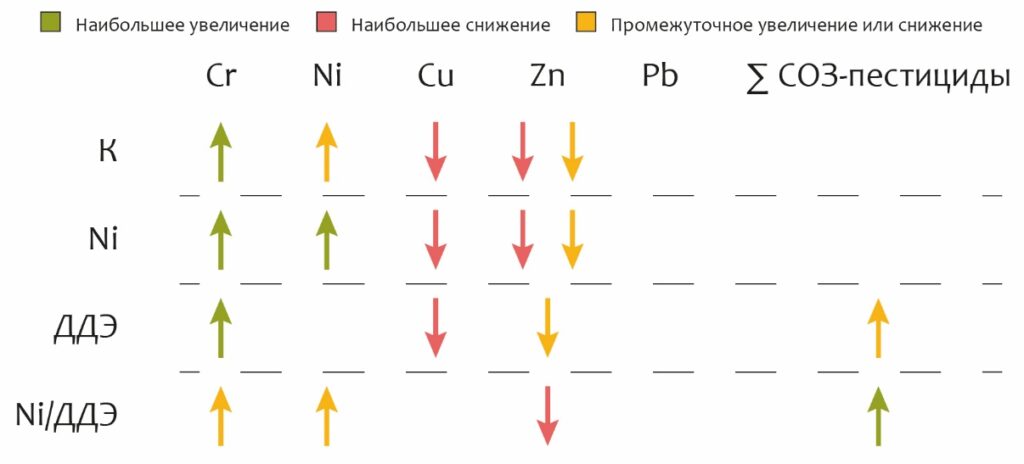
The study of the adsorption–desorption potential of biochar after the plant vegetation period revealed its ability to sorb Ni and Cr ions from the soil (r = 0.86, p < 0.05), while simultaneously desorbing Cu (r = −0.72, p < 0.05) and Zn ions (r = −0.96, p < 0.05). Biochar did not affect Pb sorption, regardless of the type of contamination. Given that Zn and Cu are essential plant nutrients, SSB biochar can be recommended as a soil amendment for Zn- and/or Cu-deficient soils.
- A scientific basis has been developed for the technology of converting M. × giganteus phytomass into biochar (Fig. 2).
Carbonization of Miscanthus × giganteus stems (29 kg) under a controlled pyrolysis regime (t = 600 °C, feed rate 2.1 kg h⁻¹, heating rate 5 °C min⁻¹, residence time in an argon atmosphere 1 h) yielded 14 kg of biochar. The biochar yield was 48.3%. Physicochemical characterization showed that the specific surface area of the biochar was 672 m² g⁻¹, with a pore size of 0.85 nm, moisture content of 4.5%, volatile matter content of 13.8%, ash content of 9.9%, pH of 9.98, and electrical conductivity of 553 mS m⁻¹.
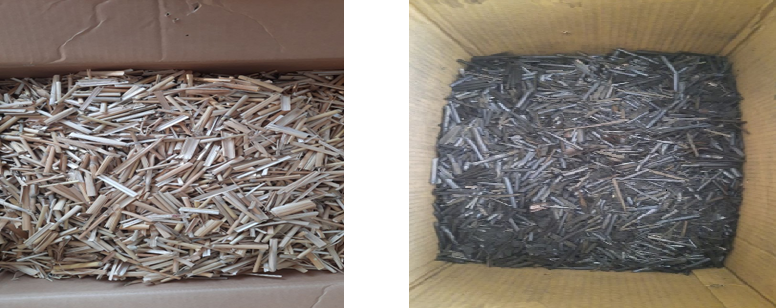
The obtained biochar is environmentally safe and intended for use on marginal, degraded, and contaminated lands, which constitutes its primary target application.
Publications 2025
List of publications in peer-reviewed scientific journals indexed in the Web of Science and (or) Scopus databases
Nurzhanova A, Pidlisnyuk V., Nurmagambetova A., Zhumasheva Z., Naizabayeva L., Mamirova A. Biochar as a Tool to Optimise Miscanthus sinensis Resilience and Phytoremediation Efficiency: Case Study of Contamination by Mixture of Ni and 4.4′-DDE. Environ. Chem. Ecotoxicol. 2025, 7, 802–818, https://doi.org/10.1016/j.enceco.2025.04.006. WoS Q1; IF = 9.0; Percentile 97%.
Abstracts of the international conference (indicating the form of the report)
1 Nurzhanova A.A.; Mamirova A.A.; Nurmagambetova A.; Zhumashev, Zh. Optimization of phytoremediation efficiency and resistance of the energy crop Miscanthus sinensis to the metabolite 4,4′-DDE and Ni ion using biochar. In: Proceedings of the International Scientific and Practical Conference Dedicated to the 30th Anniversary of the Founding of the Institute of General Genetics and Cytology and the 80th Anniversary of the Institute of Human and Animal Physiology “Genetics and Physiology: Past, Present, Future” (IGPH2025); IGF: Almaty, Kazakhstan, 2025; p. 56. Oral report:
2 Invited Speaker. Oral report: Nurzhanova A.A. Optimization of phytoremediation efficiency and resistance of the energy crop Miscanthus sinensis to the metabolite 4,4′-DDE and Ni ion using biochar. Report presented at the Seminar on the Use of Smart Agriculture: Internet of Things Technologies and the Use of Biochar, Kazakh National Agrarian Research University, Almaty, Kazakhstan, 9 September 2025.

